Guide
What Is Bitcoin Mining? How Proof of Work Secures the Network
Bottom line: competitive computation that secures Bitcoin
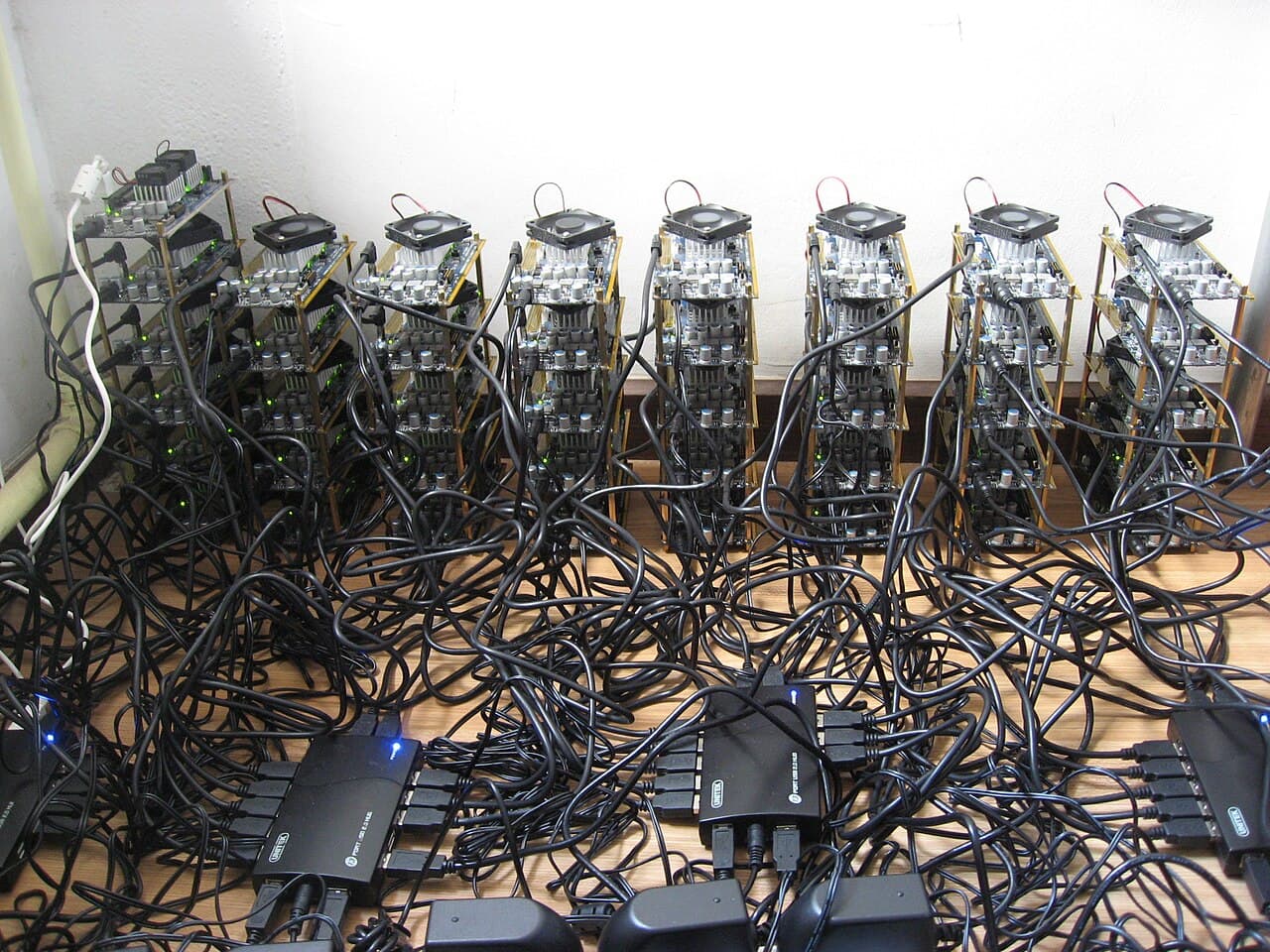
Bitcoin mining is how new transactions are confirmed and new bitcoin is created — and how the network stays secure without a central authority. Miners around the world race to solve a computational puzzle; the winner gets to add the next block of transactions and is paid a reward. This consensus mechanism is called Proof of Work (PoW).
Key takeaways
- Miners compete via Proof of Work to add the next block, on average every ~10 minutes.
- The winner earns the block reward = newly issued bitcoin (subsidy) + transaction fees. The subsidy is now 3.125 BTC.
- Difficulty auto-adjusts (about every 2,016 blocks) so blocks keep arriving roughly every 10 minutes.
- Mining secures the chain but uses significant energy; profitability depends on price, fees and electricity cost.
How Proof of Work works
To add a block, a miner repeatedly hashes the block's data with a changing number (a "nonce") until the result meets a network target. Finding a valid hash takes enormous trial-and-error, but anyone can instantly verify the answer. This asymmetry — hard to produce, easy to check — is what makes tampering with history impractical. For the bigger picture, see how Bitcoin works.
The block reward: subsidy + fees
When a miner wins, the reward has two parts:
| Part | What it is |
|---|---|
| Subsidy | Newly issued bitcoin (currently 3.125 BTC), cut in half each halving |
| Fees | Transaction fees paid by users in that block |
Over time the subsidy shrinks toward zero (around 2140), so transaction fees are designed to become the main long-term incentive for miners.
Difficulty adjustment
If more computing power joins, blocks would be found faster than 10 minutes — so Bitcoin automatically adjusts the difficulty roughly every 2,016 blocks (about two weeks) to keep the average block time near 10 minutes. This self-correcting mechanism keeps issuance on its schedule regardless of how much hardware is mining.
An honest take on profitability and energy
- Profitability is not guaranteed. It depends on the bitcoin price, transaction fees, your hardware efficiency, and — critically — electricity cost. After a halving, the subsidy drops overnight, squeezing less-efficient miners.
- Energy use is real and significant. Independent estimates such as the Cambridge Bitcoin Electricity Consumption Index (CBECI) track the network's electricity draw, which is comparable to that of a mid-sized country. There is genuine, ongoing debate about this footprint and the growing share of lower-carbon and otherwise-wasted energy used by miners.
Casual home mining of bitcoin is rarely profitable today; the activity is dominated by large, specialized operations.
FAQ
Q. What is Bitcoin mining in simple terms? A. It is a global competition to add the next block of transactions using Proof of Work. The winner secures the network and earns newly issued bitcoin plus fees.
Q. How often is a new block mined? A. About every 10 minutes on average, kept stable by automatic difficulty adjustments.
Q. How much do miners earn per block? A. The block reward: the subsidy (currently 3.125 BTC) plus the transaction fees in that block.
Q. Does Bitcoin mining use a lot of energy? A. Yes. Independent indices like Cambridge's CBECI estimate large electricity use, which is an active area of debate and efficiency improvement.
Sources
- bitcoin.org — How it works: https://bitcoin.org/en/how-it-works
- Mining (Bitcoin Wiki): https://en.bitcoin.it/wiki/Mining
- Cambridge Bitcoin Electricity Consumption Index (CBECI): https://ccaf.io/cbnsi/cbeci
Not investment advice
This article is for educational purposes only and is not investment advice. Bitcoin is volatile and carries risks including loss and theft. Do your own research and only use money you can afford to lose. Tax and regulation can change — always confirm with the official primary source.
Sources
FAQ
- What is Bitcoin mining in simple terms?
- It is a global competition to add the next block of transactions using Proof of Work. The winner secures the network and earns newly issued bitcoin plus fees.
- How often is a new block mined?
- About every 10 minutes on average, kept stable by automatic difficulty adjustments.
- How much do miners earn per block?
- The block reward: the subsidy (currently 3.125 BTC) plus the transaction fees in that block.
- Does Bitcoin mining use a lot of energy?
- Yes. Independent indices like Cambridge's CBECI estimate large electricity use, which is an active area of debate and efficiency improvement.
This article is informational only and is not financial, investment, or trading advice. Prices are reference snapshots and may be outdated. Always do your own research.