
Guide
What Are Bitcoin Treasury Companies? How Strategy (MicroStrategy) and Others Actually Do It
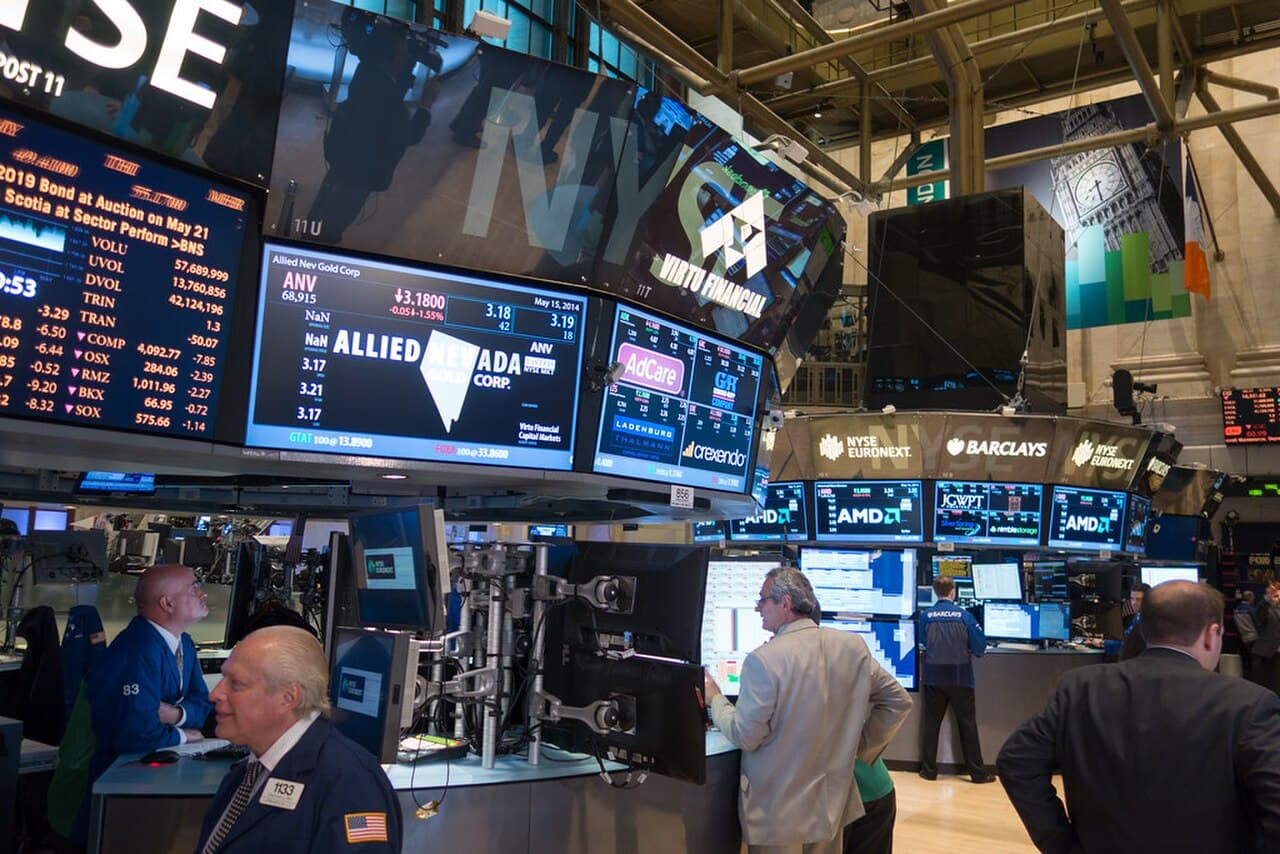
Bottom line: public companies worldwide increasingly hold bitcoin as a corporate treasury asset
Since Strategy (then MicroStrategy) began swapping part of its cash and corporate bonds for bitcoin in 2020, a growing number of public companies worldwide have adopted a "Bitcoin Treasury Strategy." As of July 2026, the largest corporate holder globally is Strategy at 843,775 BTC, with Twenty One Capital (XXI) and Metaplanet in a close race for #2 and #3 in the low-40,000s BTC. But holdings don't only rise — some companies sell portions for cash-flow reasons. This article does not recommend buying or selling any specific stock or asset; it's an educational, neutral overview of the mechanics and real-world examples. If you're not yet familiar with what Bitcoin is, start there first.
Key points of this article
- A "Bitcoin Treasury Strategy" is a management decision to hold part of a company's cash and government-bond reserves in bitcoin instead. The pioneer was Strategy (formerly MicroStrategy).
- As of July 2026, Strategy is the world's largest corporate holder at 843,775 BTC. Twenty One Capital (43,500+ BTC) and Metaplanet (43,000 BTC) follow closely behind.
- Holdings don't uniformly increase. MARA Holdings sold roughly 15,000 BTC in March 2026 to cut debt — policies differ company by company.
- A 2025 accounting-rule change (mark-to-market) means unrealized gains and losses on bitcoin holdings now flow directly into quarterly earnings.
- The "mNAV" metric shapes stock prices and financing mechanics, and a shrinking premium can undermine the fundraising model. Corporate treasury strategy and personal investing operate under very different assumptions — none of this is investment advice.
What a "Bitcoin Treasury Strategy" is
A Bitcoin Treasury Strategy is a management policy of holding some (or a large share) of the cash a company generates from operations or raises through financing in bitcoin, instead of cash or short-term government bonds. Companies commonly cite three rationales: hedging against the erosion of fiat currency's real value, holding a scarce asset as a long-term reserve, and a financing model — pioneered by Strategy — of raising capital in equity markets to buy more bitcoin, growing "bitcoin per share." That last model is explained in the mNAV section below.
A tailwind from accounting rules: mark-to-market (ASU 2023-08)
How companies account for bitcoin holdings changed substantially starting in 2025. The US Financial Accounting Standards Board's (FASB) new standard, ASU 2023-08, applies to fiscal years beginning after December 15, 2024 (fiscal 2025 for calendar-year companies) and requires companies to mark eligible crypto assets like bitcoin to market value each quarter, flowing unrealized gains and losses through net income.
Under the old rule, bitcoin was treated as an "indefinite-lived intangible asset": companies recognized impairment (a loss) only if the price fell below cost, and could not recognize gains until they actually sold — an asymmetric rule that recorded losses only. Under the new rule, both gains and losses flow directly into that quarter's earnings, making bitcoin's price swings a more visible driver of quarterly results. Tesla, for instance, reportedly booked roughly $173 million in unrealized losses in Q1 2026 as bitcoin's price fell.
Major bitcoin-holding companies (real examples, as of July 2026)
Strategy (formerly MicroStrategy) — the world's largest corporate holder
Strategy (Nasdaq: MSTR) held 843,775 BTC as of July 5, 2026, making it the largest corporate bitcoin holder in the world. The company announced it was renaming from "MicroStrategy" to "Strategy" on February 5, 2025 (the legal name change took effect August 11, 2025), and calls itself "the world's first Bitcoin Treasury Company."
Notably, Strategy is not a one-way buyer. In the week through July 6, 2026, it reportedly sold a portion of its BTC holdings — 3,588 coins, worth roughly $216 million at about $60,000 per BTC — to fund dividend payments on its preferred shares (STRK, STRF, STRC, STRD, and others) and replenish dollar reserves. This was reported as the largest disclosed sale since the company began acquiring bitcoin in 2020, following a smaller tax-loss-harvesting sale in 2022 and another small sale in June 2026 — the third such instance. Even the "world's largest holder" sometimes draws down its BTC for cash-flow reasons.
Twenty One Capital (XXI) — a "bitcoin-native company" led by Tether and Bitfinex
Twenty One Capital (NYSE: XXI) listed on the New York Stock Exchange in December 2025, led by stablecoin issuer Tether and its affiliated exchange Bitfinex, holding over 43,500 BTC at listing. SoftBank Group had participated as a minority shareholder, but in May 2026 Tether announced it would buy out SoftBank's stake and remove SoftBank's board seat. Beyond simply holding bitcoin, the company has outlined plans to integrate payments and mining businesses — a "purpose-built bitcoin-native company" model distinct from Strategy's.
Metaplanet — Japan's leading bitcoin treasury company
Metaplanet (ticker 3350), listed on the Tokyo Stock Exchange Standard Market, is Japan's largest corporate bitcoin holder by a wide margin. As of March 31, 2026 it held 40,177 BTC (roughly $3.9 billion in total acquisition cost), ranking third globally among corporate holders at that point. It has continued buying since, reportedly reaching 43,000 BTC as of June 30, 2026 — putting it within a hair of Twenty One Capital for the global #2/#3 spot. A Japanese company holding bitcoin at this scale is unusual, and it's a useful reference point for readers tracking overseas bitcoin treasury trends.
MARA Holdings — a mining company that shows holdings don't only grow
Bitcoin miner MARA Holdings (formerly Marathon Digital) is also a large corporate BTC holder, but its 2026 activity is a real-world example that holdings don't uniformly rise. The company held 53,822 BTC as of the end of February 2026, then sold roughly 15,133 BTC for about $1.1 billion between March 4 and March 25. It used the proceeds to repurchase convertible notes, cutting its outstanding convertible debt from roughly $3.3 billion to roughly $2.3 billion — about a 30% reduction. Post-sale holdings stood around 38,689 BTC. CEO Fred Thiel described the sale as strengthening the balance sheet as "a foundation for long-term growth." It's worth remembering that a company that mines bitcoin itself can still choose to reduce holdings for treasury-management reasons.
Tesla — an example of a smaller, partial allocation within a large company
Electric-vehicle maker Tesla (Nasdaq: TSLA) has held 11,509 BTC unchanged since acquiring bitcoin in 2021, with no change as of Q1 2026. Unlike companies that put bitcoin at the center of their treasury strategy like Strategy, bitcoin represents a small slice of Tesla's overall balance sheet. It remains a useful example, though, of how the new accounting standard makes price swings show up directly as reported gains or losses.
Risk: mNAV, leverage, and forced-sale scenarios
A key metric for understanding Strategy-style bitcoin treasury company stocks is "mNAV" (market-cap to Net Asset Value) — a company's market capitalization (or enterprise value) divided by the market value of its bitcoin holdings.
The financing model Strategy has run only works when the stock trades above 1.0x mNAV (a premium). Issuing new shares above 1.0x and using the proceeds to buy more bitcoin increases existing shareholders' "bitcoin per share" — the premium justifies further share issuance, creating a virtuous cycle (a "flywheel") that draws in more capital.
But when the stock trades below 1.0x mNAV (a discount), the mechanism runs in reverse: issuing new shares below 1.0x actually dilutes existing shareholders' bitcoin-per-share. As of June 2026, reports indicated MSTR shares were trading roughly 17–18% below the level needed to keep buying more bitcoin without diluting shareholders — a sign the premium-dependent financing model was facing headwinds. On top of that, these companies often also rely on debt-heavy instruments like convertible notes and preferred shares, raising the risk of "forced sales" of bitcoin at a loss if market conditions deteriorate. Stock prices don't necessarily track bitcoin's price move-for-move — a company's debt structure and financing environment can amplify or even move it in the opposite direction.
What individual investors should know
Buying a bitcoin treasury company's stock is not the same as buying bitcoin itself. Corporate stock carries the leverage, dilution, and business risks described above on top. If you're considering direct exposure to bitcoin, see how to buy bitcoin; to track indirect flows via ETFs, see our coverage of bitcoin ETF inflows and outflows. Corporate treasury adoption is a different phenomenon from a government making Bitcoin legal tender — El Salvador remains the only country to have done that, and even there acceptance is now voluntary rather than mandatory; see where Bitcoin is legal tender worldwide for the country-level picture.
A company's decision to allocate treasury assets to bitcoin and an individual's decision to hold bitcoin as part of personal savings rest on very different assumptions about capital, time horizon, and risk tolerance. This article describes the mechanics and real-world examples; it does not recommend buying or selling any specific stock or crypto asset.
Frequently asked questions
Q. Do bitcoin treasury company stocks move in lockstep with the bitcoin price? A. Not simply. A company's debt structure and its "mNAV" (the ratio of market cap to the value of its bitcoin holdings) can make the stock swing more than bitcoin itself. If the premium shrinks or disappears, the stock can fall faster than bitcoin's price.
Q. Is buying MicroStrategy (Strategy) stock the same as buying bitcoin? A. No. Strategy stock carries the company's debt, share issuance, and business risk baked in — its price mechanics differ from holding bitcoin directly.
Q. Is Metaplanet the only Japanese company holding bitcoin? A. As of July 2026 it's the largest, but this reflects one company's individual strategy — this article does not recommend investing in any specific company.
Q. Will corporate bitcoin holdings keep growing indefinitely? A. Not uniformly. Companies like MARA Holdings have sold part of their holdings for debt-reduction reasons. Strategy itself made a partial sale in July 2026.
Sources
- CoinDesk — "Michael Saylor's Strategy dramatically ups pace of bitcoin sales, raising $216 million" (July 6, 2026): https://www.coindesk.com/markets/2026/07/06/michael-saylor-s-strategy-dramatically-ups-pace-of-bitcoin-sales-raising-usd216-million
- Strategy — official press release, "MicroStrategy is Now Strategy" (February 5, 2025): https://www.strategy.com/press/microstrategy-is-now-strategy_02-05-2025
- CoinDesk — "Metaplanet (3350) acquires 5,075 BTC, jumps to third largest Bitcoin treasury company" (April 2, 2026): https://www.coindesk.com/markets/2026/04/02/metaplanet-acquires-5-075-btc-jumps-to-third-largest-bitcoin-treasury-company
- TFTC — "Metaplanet Adds 2,823 BTC, Hits 43,000 and Becomes #3 Corporate Treasury" (July 2, 2026): https://www.tftc.io/metaplanet-43000-btc-q2-2026-third-largest-corporate-treasury
- BusinessWire — "Twenty One Capital Outlines Operating Plans to Build the Bitcoin Company" (May 20, 2026): https://www.businesswire.com/news/home/20260520500872/en/Twenty-One-Capital-Outlines-Operating-Plans-to-Build-the-Bitcoin-Company
- Bitcoin Magazine — "MARA Dumps $1.1 Billion In Bitcoin To Cut Debt By 30%": https://bitcoinmagazine.com/news/mara-dumps-1-1-billion-in-bitcoin
- CoinDesk — "Tesla made no changes to bitcoin holdings in Q1 as it booked $173 million digital asset loss" (April 22, 2026): https://www.coindesk.com/markets/2026/04/22/elon-musk-s-tesla-reports-unchanged-bitcoin-holdings-books-usd173-million-digital-asset-loss
- KPMG — "FASB issues final ASU on crypto asset accounting" (ASU 2023-08 explainer): https://kpmg.com/us/en/frv/reference-library/2023/fasb-to-issue-final-crypto-asset-accounting-asu.html
- CoinDesk — "Bitcoin Treasury Stocks: How to Read 'mNAV' — and Why NYDIG Says It Falls Short" (November 30, 2025): https://www.coindesk.com/business/2025/11/30/what-mnav-really-tells-you-about-bitcoin-treasury-companies-and-where-it-falls-short
A note before investing
This article is intended for informational purposes and is not investment or tax advice. Bitcoin carries risks including price volatility, hacking, and loss. Make investment decisions at your own responsibility and only with funds you can afford to risk. This article reflects publicly available information as of its publish date; always verify current details with primary sources.
Sources
- Michael Saylor's Strategy dramatically ups pace of bitcoin sales, raising $216 million — CoinDesk
- MicroStrategy is Now Strategy — official press release (Strategy.com)
- Metaplanet (3350) acquires 5,075 BTC, jumps to third largest Bitcoin treasury company — CoinDesk
- Metaplanet Adds 2,823 BTC, Hits 43,000 and Becomes #3 Corporate Treasury — TFTC
- Twenty One Capital Outlines Operating Plans to Build the Bitcoin Company — BusinessWire
- MARA Dumps $1.1 Billion In Bitcoin To Cut Debt By 30% — Bitcoin Magazine
- Tesla made no changes to bitcoin holdings in Q1 as it booked $173 million digital asset loss — CoinDesk
- FASB issues final ASU on crypto asset accounting (ASU 2023-08) — KPMG
- Bitcoin Treasury Stocks: How to Read 'mNAV' — and Why NYDIG Says It Falls Short — CoinDesk
FAQ
- Do bitcoin treasury company stocks move in lockstep with the bitcoin price?
- Not simply. A company's debt structure and its "mNAV" (the ratio of market cap to the value of its bitcoin holdings) can make the stock swing more than bitcoin itself. If the premium shrinks or disappears, the stock can fall faster than bitcoin's price.
- Is buying MicroStrategy (Strategy) stock the same as buying bitcoin?
- No. Strategy stock carries the company's debt, share issuance, and business risk baked in — its price mechanics differ from holding bitcoin directly.
- Is Metaplanet the only Japanese company holding bitcoin?
- As of July 2026 it's the largest, but this reflects one company's individual strategy — this article does not recommend investing in any specific company.
- Will corporate bitcoin holdings keep growing indefinitely?
- Not uniformly. Companies like MARA Holdings have sold part of their holdings for debt-reduction reasons. Strategy itself made a partial sale in July 2026.
This article is informational only and is not financial, investment, or trading advice. Prices are reference snapshots and may be outdated. Always do your own research.


