Guide
Is Bitcoin Mining Profitable? Costs, Electricity, and the Reality for Individuals
The bottom line: home mining is generally a losing proposition
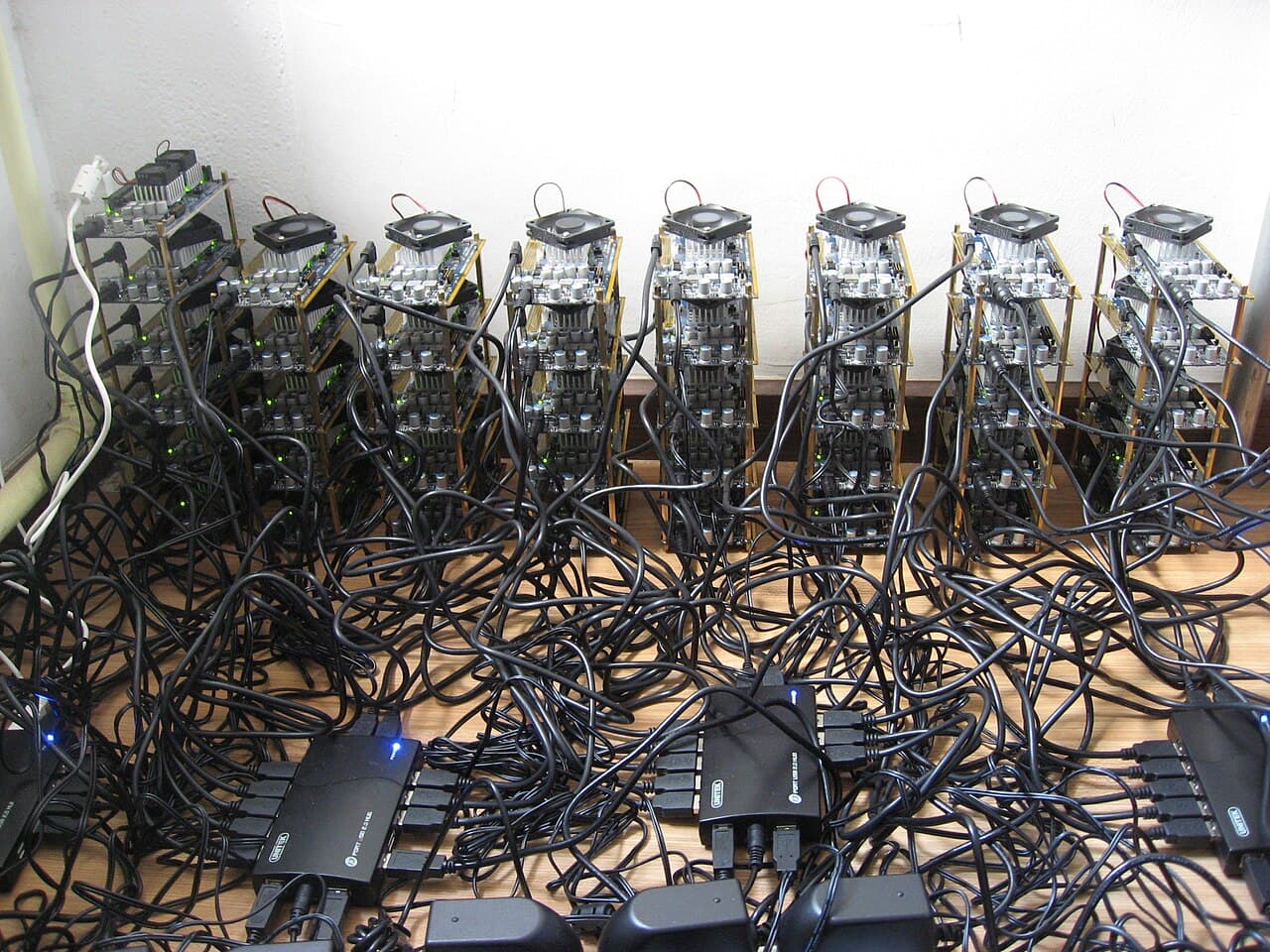
"Can I make money by mining Bitcoin on my home PC?" The short answer is that solo home mining is extremely difficult to make profitable today. Mining has become a global race in which operators deploy vast arrays of specialized machines (ASICs), and it's very hard for an individual using ordinary hardware to compete. Nothing here guarantees a profit — start with what is mining to get the big picture first.
Key takeaways
- Profitability comes down to four factors: electricity cost, hashrate, difficulty, and rewards.
- The competition is dominated by large-scale ASIC operators. Home PCs and GPUs are at a disadvantage.
- Difficulty keeps rising, and the reward is cut in half at every halving.
- No one can guarantee a profit. There is no guarantee you'll earn more than your electricity and hardware costs.
The four factors that determine profitability
| Factor | What it is | How it affects you |
|---|---|---|
| Electricity cost | The power cost of running mining machines | Higher is worse. Your biggest expense |
| Hashrate | Your computing power (your odds of winning a block) | Higher means more chances to earn rewards |
| Difficulty | How intense the competition is network-wide | The higher it goes, the smaller each machine's share |
| Reward | Block reward plus transaction fees | Cut in half at each halving |
Mining is a "competition to win rewards." As the total computing power of the network grows, the difficulty automatically adjusts roughly every two weeks, and the fiercer the competition, the smaller your share. The mechanism is explained in detail in what is difficulty adjustment.
Why home setups are at a disadvantage
- ASICs are the baseline: Bitcoin mining is overwhelmingly efficient with SHA-256-specific ASICs, and ordinary PCs or GPUs simply can't compete on speed or power efficiency.
- The electricity barrier: Large operators secure cheap power (surplus electricity, renewables, associated gas, and so on). At household electricity rates, the same computation tends to cost far more.
- Economies of scale: Large-scale operators optimize procurement, cooling, and operations of their hardware.
- Pool participation is the norm: Because an individual's odds of finding a single block alone are extremely low, miners typically join a mining pool and receive small payouts proportional to their contribution.
The halving cuts the reward in half
Bitcoin's block reward is halved roughly every four years at the halving. Because the amount of new BTC earned from mining drops, profitability becomes even tougher unless the price or transaction fees rise to compensate. For more, see what is the halving.
Caution
Be wary of mining investments or cloud-mining pitches that claim you'll "definitely profit" or "recover your costs in X months." Profitability constantly shifts with electricity costs, difficulty, and price, and no one can guarantee a profit. This article does not promise any return.
Frequently asked questions
Q. Can I mine Bitcoin on my home PC or smartphone? A. Technically you can participate, but in an ASIC-dominated competition it doesn't make economic sense in practice. In most cases, your electricity cost exceeds the rewards.
Q. How is mining profit determined? A. By electricity cost, hashrate, difficulty, and rewards (plus fees), together with the price. All of these fluctuate, so profit cannot be guaranteed in advance.
Q. Is cloud mining profitable? A. Profitability is determined by the same factors, with fees and operator risk added on top. Anything promising "guaranteed high yields" has a high chance of being a scam, so be especially careful.
Q. Does the halving put me at a disadvantage? A. Because the reward is cut in half, profitability gets tougher unless the price or fees rise. You need to factor this in as a long-term assumption.
Sources
- bitcoin.org, "How does Bitcoin work? (mining)": https://bitcoin.org/en/how-it-works
- Bitcoin Wiki, "Mining": https://en.bitcoin.it/wiki/Mining
A note on investing
This article is for informational purposes only and is not investment advice. Bitcoin carries risks including price volatility, hacking, and loss. Make investment decisions at your own responsibility and only with funds you can afford to lose. Tax rules and regulations can change, so always confirm the latest details from official primary sources.
Sources
FAQ
- Can I mine Bitcoin on my home PC or smartphone?
- Technically you can participate, but in an ASIC-dominated competition it doesn't make economic sense in practice. In most cases, your electricity cost exceeds the rewards.
- How is mining profit determined?
- By electricity cost, hashrate, difficulty, and rewards (plus fees), along with the price. All of these fluctuate, so profit cannot be guaranteed in advance.
- Is cloud mining profitable?
- Profitability is determined by the same factors, with fees and operator risk added on top. Anything promising guaranteed high yields has a high chance of being a scam, so be especially careful.
- Does the halving put me at a disadvantage?
- Because the reward is cut in half, profitability gets tougher unless the price or fees rise. You need to factor this in as a long-term assumption.
This article is informational only and is not financial, investment, or trading advice. Prices are reference snapshots and may be outdated. Always do your own research.